Updated November 3, 2026 · by the Stride Stories team · every fact checked against a source
Running in Central Park is a New York ritual, and the big loop on the park drives is the classic. The park's drives total 6.1 miles, and since June 2018 the loop drives have been closed to cars for good. You share the road with other runners, walkers, cyclists and skaters.
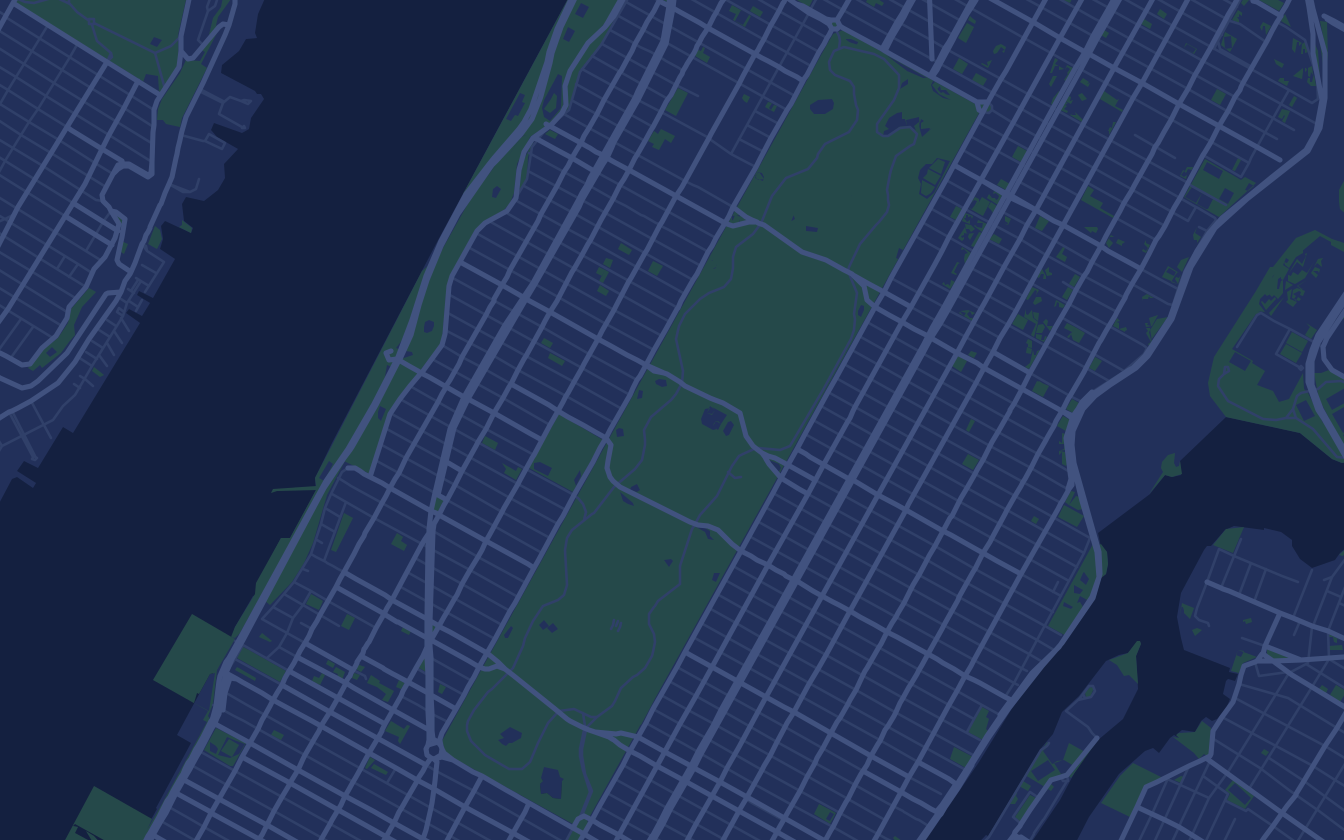
This guide follows our tour The Loop: Central Park, a 6.0-mile run that starts and ends at Merchants' Gate by Columbus Circle. It heads east along the south end, up the East Drive past the museum and the Reservoir, over the hills at the north end, and back down the West Drive.
Before you go: practical tips
- Pick the right lane. The drives are split into lanes, and as of 2025 the left lane of each drive is a beige path for people on foot. The center lane is for slower cyclists and the right lane for faster ones. Stay in the pedestrian lane and keep an eye out for bikes.
- Expect the hills up north. The tour goes over the hills at the north end of the park. At McGown's Pass the road climbs to a crest, then drops steeply toward the Harlem Meer, and nearby is the Great Hill, the park's third-highest point.
- Want something shorter? New York Road Runners has a designated 5-mile running loop inside the park. The track around the Reservoir is 1.58 miles and makes an easy add-on or a gentler alternative.
- Know whose loop it is. In 2021 NYC Parks named a six-mile stretch of the park the Ted Corbitt Loop, after the runner who became founding president of New York Road Runners.
The loop, mile by mile
Mile 0: Merchants' Gate and the USS Maine Monument
You start at Columbus Circle, under the gilded figures of the USS Maine Monument, dedicated on Memorial Day 1913. The gate itself was named in 1862 for the city's merchants, one of twenty park gates named for the people of New York.
Mile 0.3: The Pond
Just off the drive is the Pond, in the park's southeast corner. Olmsted and Vaux won the design competition in April 1858. The site was shanties, pig farms and swamps, and much of what looks natural today was made by people. Around five million cubic feet of soil and rock were carted out, and more gunpowder was used than at the Battle of Gettysburg.
Mile 1.5: Cleopatra's Needle
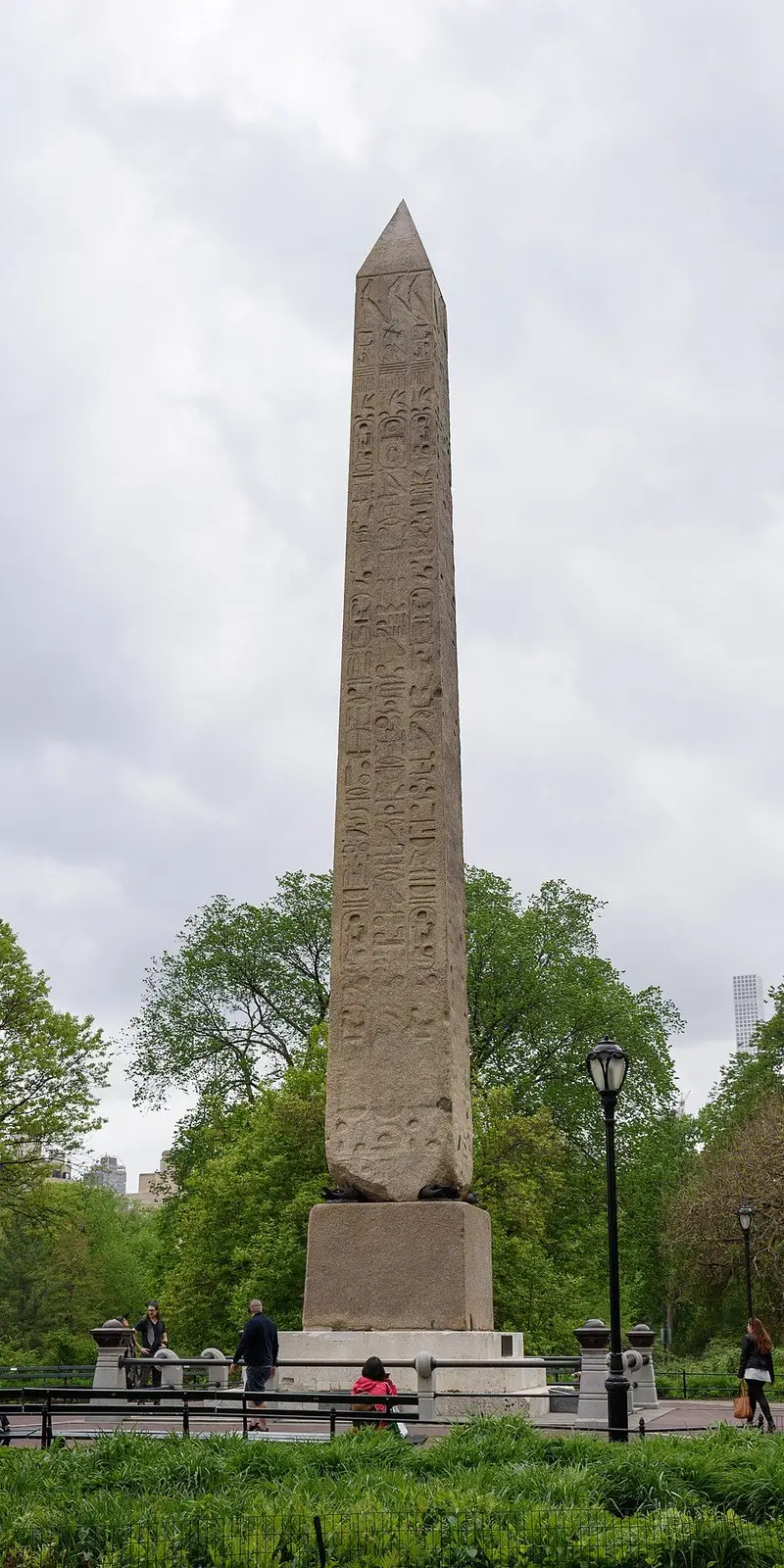
Up the East Drive, look through the trees for a tall granite pillar. Cleopatra's Needle was cut for the pharaoh Thutmose III around 1443 BC. The name is a fanciful one: Cleopatra died about twenty years before it even reached Alexandria. It sailed from Alexandria in 1880, about 200 tons of stone loaded through a hole cut in a steamship's bow. Look for the bronze crabs at its base.
Mile 1.8: The Reservoir
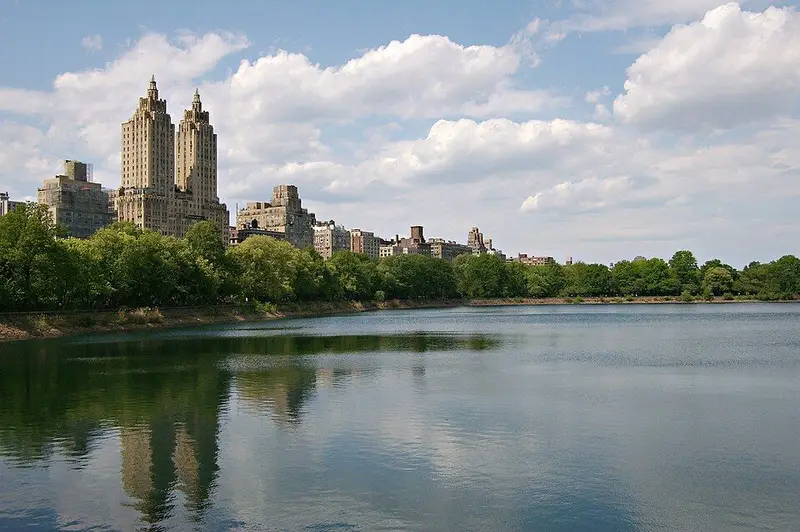
The wide sheet of water beside you is the Jacqueline Kennedy Onassis Reservoir. It covers 106 acres and holds over a billion gallons. The fence along its running track recreates the original 19th-century cast-iron fence, copied from a section that scuba divers found at the bottom of the reservoir.
Mile 2.0: Fred Lebow and the Marathon
At 90th Street and East Drive, a bronze runner in a cap checks his watch. That's Fred Lebow, founder of the New York City Marathon. The first race, in 1970, was 127 runners doing loops of this very drive, and only 55 finished. Each year park workers truck the 600-pound statue to the marathon finish line. Some runners rub it for luck.
Mile 2.9: McGown's Pass
Here the road climbs to a crest, then drops steeply toward the Harlem Meer. The pass was once where the old Post Road crossed the hill, and a British description of the island said a few troops could stop an army here.
Mile 3.1: Harlem Meer
The lake in the park's northeast corner is man-made. "Meer" is Dutch for lake. Before the park, this was Harlem Creek and a tidal marsh that cut the village of Harlem off from the rest of Manhattan.
Mile 3.4: The Blockhouse and Harlem Hill
Look up into the trees on the rocky crag for a squat stone fort. The Blockhouse was finished in 1814 as one of a line of War of 1812 forts. Nearly 2,000 militiamen garrisoned these forts, but the British never attacked. Nearby, the Great Hill is the park's third-highest point, at 135 feet, and your legs will know it.
Mile 4.4: Seneca Village
Heading down the West Drive, you pass the wooded slope between 82nd and 89th Streets. Seneca Village was founded in 1825 by free Black Americans. The city's landmarks agency calls it the largest community of free African American property owners in mid-19th-century New York. In 1857 the city took the land for the park, and the village was cleared.
Mile 5.3: Strawberry Fields
Near West 72nd Street, look for the round mosaic with one word: "Imagine." Strawberry Fields is a two-and-a-half-acre memorial to John Lennon. The mosaic was a gift from the city of Naples, Italy. Yoko Ono asked for a living memorial rather than a statue.
Mile 5.6: Sheep Meadow and Tavern on the Green
The huge lawn to the east was planned as a parade ground. Olmsted and Vaux opposed military use, and in 1864 a flock of 200 pedigree Southdown sheep arrived instead. Their sheepfold is now Tavern on the Green, which stands next to the New York City Marathon finish line. In 1934 Robert Moses sent the sheep away to make room for a restaurant.
Mile 6.0: Back to Columbus Circle
You finish where you started, at Merchants' Gate.
Hear it as you run
You can run this loop with a map and this page. Or let the stories come to you: in the Stride Stories app, The Loop: Central Park plays eleven short stories as you reach each place, timed to your pace. Your music drops under each story and comes back after, and you can add an optional soundtrack. The tour page estimates 57 minutes of running.
 © OpenStreetMap
Want a bridge run next? See our guide to running the Brooklyn Bridge, or browse more NYC running routes with a story at every mile.
How long is the Central Park running loop?
The park's drives total 6.1 miles. Our tour route around the loop, from Columbus Circle and back, is 6.0 miles.
Is the Central Park loop car-free?
Yes. All three loop drives were closed to cars permanently in June 2018. You share the drives with cyclists, so stay in the lane for people on foot.
How long is the running track around the Reservoir?
The track around the Jacqueline Kennedy Onassis Reservoir is 1.58 miles.
Where are the hills on the Central Park loop?
Mostly at the north end of the park, around McGown's Pass, the Harlem Meer and the Great Hill, which at 135 feet is the park's third-highest point.
Hear the stories as you pass them
Stride Stories plays each place's story as you reach it, timed to your pace, and lowers your music while it talks. Tours download to your phone and work without a connection.