Updated November 3, 2026 · by the Stride Stories team · every fact checked against a source
Lower Manhattan is where New York started: the Dutch fort, the first paved street, the wall that gave Wall Street its name, and the spot where George Washington became president. It's also compact enough to see on foot in an afternoon, and you don't need a guide to do it.
This route follows our tour Where New York Began, a 1.81-mile walk from Castle Clinton at the tip of Manhattan to the African Burial Ground near City Hall. It's one of the free sample tours in the Stride Stories app, so you can hear every story at no cost. Or just use this page as your map.
Before you go
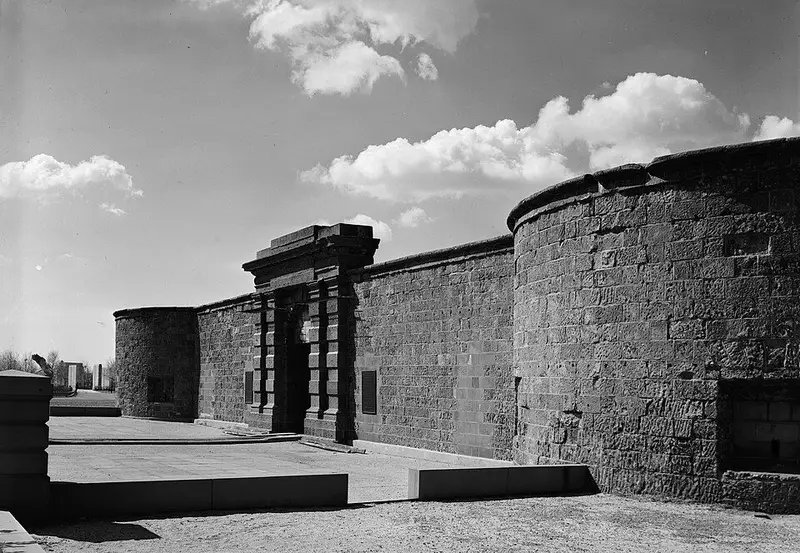
- Where it starts: Castle Clinton, the round stone fort at the tip of Manhattan. Today it houses the Statue of Liberty ticket office.
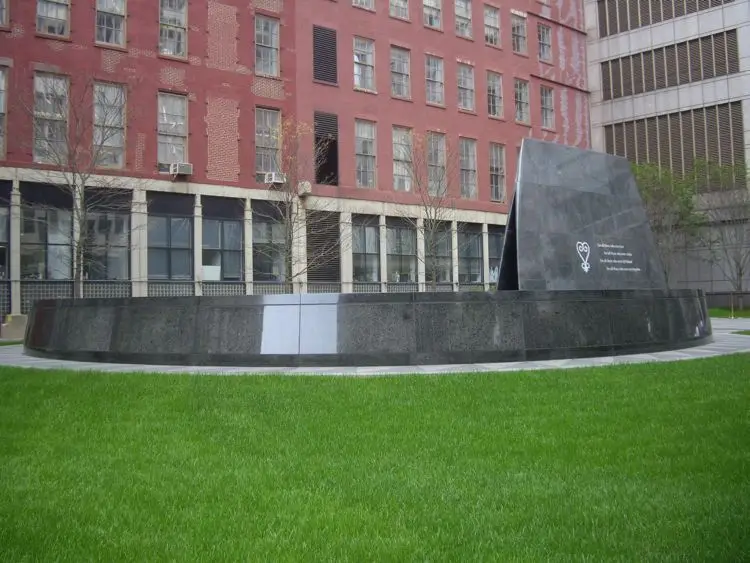
- Where it ends: the African Burial Ground National Monument, at Duane Street and African Burial Ground Way. The memorial and the visitor center inside 290 Broadway are free. The visitor center is closed on Thanksgiving, Christmas and New Year's Day.
- How long it takes: the tour page lists about 36 minutes of walking. Plan on an hour or more if you stop to look inside places.
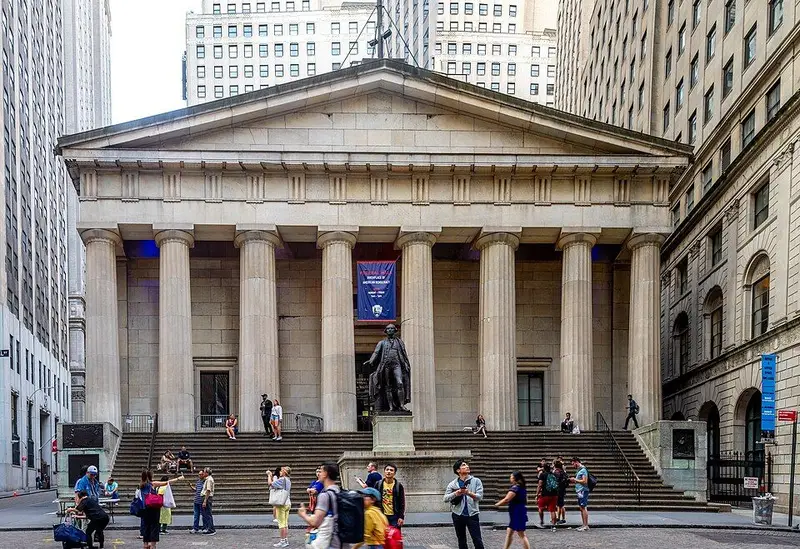
- Worth a stop: Federal Hall is free and you can visit on your own without a reservation. Since cracked stone was found in 2021 it has faced a long repair project, and the visitor entrance is currently at 15 Pine Street.
- Lunch: in summer, the two eastern blocks of Stone Street are pedestrian-only with outdoor dining.
The walk, stop by stop
1. Castle Clinton
Built between 1808 and 1811 as the Southwest Battery, this fort never fired at an enemy. Later it became an entertainment center and opera house and then, from 1855, the nation's first official immigrant processing center. More than seven million people entered the country here.
2. Bowling Green
This oval of grass is New York City's oldest public park. On July 9, 1776, a crowd pulled down the gilded statue of King George III that stood here, and most of it was melted into bullets for American troops. The iron fence around the green dates from 1771.
3. Charging Bull
Arturo Di Modica made the bull after the 1987 stock market crash and dropped it outside the New York Stock Exchange in December 1989, without permission. Police took it away, and after a public outcry the city reinstalled it here. It still stands on a temporary permit.
4. Fraunces Tavern
On December 4, 1783, George Washington said farewell to his officers in the Long Room here. The building began as a house in 1719, though how much of today's building is original is disputed.
5. Stone Street
In 1657 the residents of this street asked to have it cobbled, and paid for it themselves. It became the first paved street in New Amsterdam.
6. Delmonico's
Founded in 1827, Delmonico's became one of the first fine-dining restaurants in the United States. New Yorkers were told the columns at its door came from the ruins of Pompeii. It's a claim nobody has proven.
7. Wall Street and the wall
Yes, there was a wall. The Dutch built it, most likely in 1653, from earth and wooden planks, and it came down in 1699. A city marker at Wall and Water Streets recalls the market nearby where enslaved people were bought and sold from 1711.
8. 40 Wall Street, Federal Hall and 23 Wall Street
Look up at 40 Wall Street, built in about a year in a race with the Chrysler Building to be the world's tallest. Chrysler won. Nearby, Federal Hall stands on the site where Washington took the oath as first president on April 30, 1789. On the corner, the stone of 23 Wall Street still carries scars from a 1920 bombing. The bank never repaired them.
9. Trinity Church
At the head of Wall Street, the Gothic church you see was completed in 1846. Its spire made it the tallest building in the United States until 1869. Alexander Hamilton is buried in the churchyard.
10. Equitable Building
This huge block rises straight up from the sidewalk with no setbacks. On completion in 1915 it was the largest office building in the world, and it was the prime example cited in the hearings that led to the city's 1916 zoning rules.
11. St. Paul's Chapel
The Landmarks Commission calls it the oldest existing church building in New York. It was designed to face the river, so the Broadway porch is technically its back. Washington worshipped here while New York was the capital.
12. City Hall Park and the Woolworth Building
City Hall Park is what's left of the colonial Commons, where the Declaration of Independence was read to the troops in 1776. Across Broadway, the 792-foot Woolworth Building was the tallest building in the world when it was completed in 1913.
13. African Burial Ground
The walk ends at a memorial over a cemetery used until 1795. The National Park Service dates its first burials to the mid-1630s and calls it the earliest and largest African burial ground rediscovered in the United States. It was found again in 1991, during work on a federal office tower, and the remains of 419 people were reburied here in 2003.
Take the free audio tour
Reading on the sidewalk works. Listening is easier. In the Stride Stories app, Where New York Began is free. Press start, and each story plays by itself as you reach its stop, timed to your pace, so you can look up instead of down. Tours download to your phone and play without a connection, and there's an optional soundtrack for the gaps.
 © OpenStreetMap
If you'd rather run, the Brooklyn Bridge run starts in City Hall Park, right where this walk passes. For more ideas, see NYC running routes with a story at every mile.
Is this Lower Manhattan walking tour really free?
Yes. Where New York Began is one of the free sample tours in the Stride Stories app, and everything on this page is free to read and use.
How long is the walk?
The route is 1.81 miles, from Castle Clinton at the tip of Manhattan to the African Burial Ground. The tour page lists about 36 minutes of walking, plus whatever time you spend at each stop.
Can I go inside Federal Hall?
Yes. Entry is free and you can visit on your own without a reservation. The visitor entrance is currently at 15 Pine Street.
Is the African Burial Ground free to visit?
Yes. The outdoor memorial and the visitor center inside 290 Broadway are both free. The visitor center is closed on Thanksgiving, Christmas and New Year's Day.
Hear the stories as you pass them
Stride Stories plays each place's story as you reach it, timed to your pace, and lowers your music while it talks. Tours download to your phone and work without a connection.